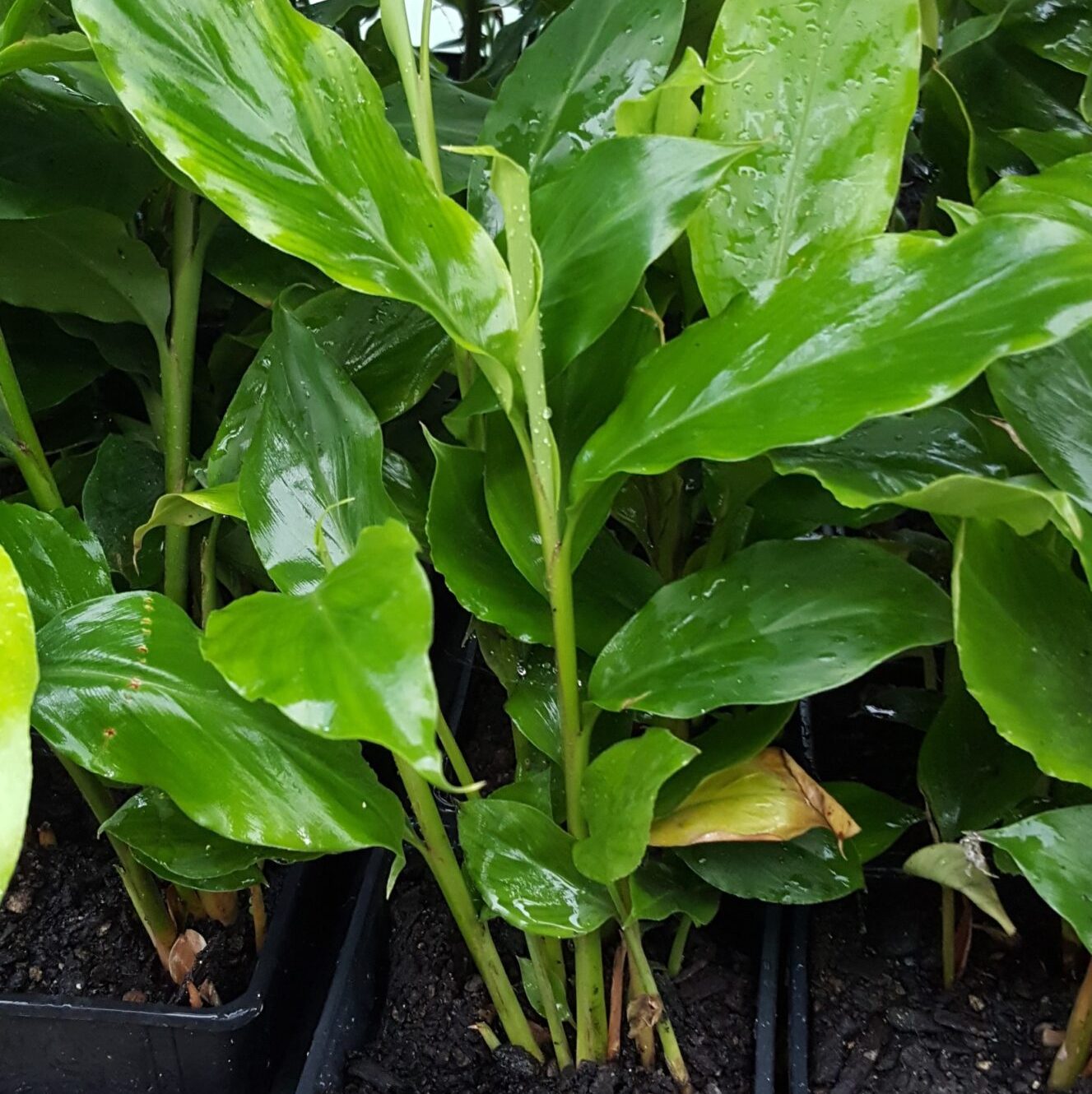
Alpinia spp
Also known as Dwarf Cardamom, and Cardamom Ginger, this plant is one of several species which are almost identical or which indeed may be synonyms – Alpinia speciosa, A. nuticans, A. mutica and Zerumbet speciosum, and we are unable to define our species for sure, but all are grown and used the same way. The plant is actually an evergreen ginger and as such is a sub-tropical to tropical evergreen clumping forming plant. It grows up to to one metre tall in the right conditions – preferably a moist summer and a dry winter (typical of other subtropicals). Mature clumps will produce beautiful shell-like flowers in spring, which are white with a yellow throat. The plants are well loved by landscapers for their lushness and tropical look.
Although related, and similar in looks to the tropical true cardamom (Elettaria cardamomum), this plant will not produce the same edible seed pods the true species is famous for. However it is much hardier, and the false cardamom leaves still have the most divine aroma with hints of cardamom, cinnamon and kawakawa. They can be added to flavour rice whilst steaming, or wrapped around chicken or fish to infuse the delicate flavour. They can also be infused in hot water to make a tea. The flowers are also edible and can be added to salads or used as a garnish for cakes.
Traditionally the roots of Alpinia species have been used medicinally used to treat fever, muscle spasms, intestinal gas, and inflammation as well as to kill bacteria; and as a stimulant. Although many sources state there is insufficient scientific evidence for medicinal benefits, in Brazil, A. zerumbet is one of the most cited plants for folk medicine and it has been suggested for use by Brazil’s public health system, and the roots of Galangal (A. officinarum) are well known for their medicinal qualities. In Asia the leaves and the extracted oils of the Alpinia plant have long been used to relieve fevers and malaria, as well as to serve as a general health tonic.
Dwarf Cardamom can handle light frosts outdoors (to approx -3 degrees)and will recover but growth may be set back. Ours have done well for many years keeping their leaves through winter under no more than shadecloth, although they are even happier in our shaded polytunnel. We have yet to try them out in under the canopy areas of our food forest but they should make a great understorey plant there, providing biomass to chop and drop for the likes of our citrus and casimiroas (and allowing us to enjoy their fragrance as we do so!).
False Cardamom enjoys free draining soils rich in organic matter, and can tolerate full sun in subtropical zones but part shade is better in hot dry areas like Hawke’s Bay. Keep well watered and fed through summer.
Certified organic plant in 11cm pot.
Freight: full list of freight and packing charges