ORDERS FOR DELIVERY THIS YEAR HAVE NOW CLOSED. THE OFFICE WILL BE CLOSED FROM COB TUES 23 DECEMBER, RE-OPENING MONDAY 19 JANUARY, AND FIRST ORDERS FOR 2026 WILL GO OUT FROM MONDAY 26 JANUARY. WE WISH ALL OUR CUSTOMERS ALL THE BEST FOR BOTH THE FESTIVE AND THE GROWING SEASON. NGA MIHI O TE KIRIHIMETE ME TE TAU HOU:)

True Medicinal Comfrey

Symphytum officinale

$12.50

Out of stock

Join the waitlist to be emailed when this product becomes available

If you want comfrey for medicinal use, please read on. If you want comfrey for garden use, please see our other varieties – Russian Comfrey and Dwarf Evergreen Comfrey.

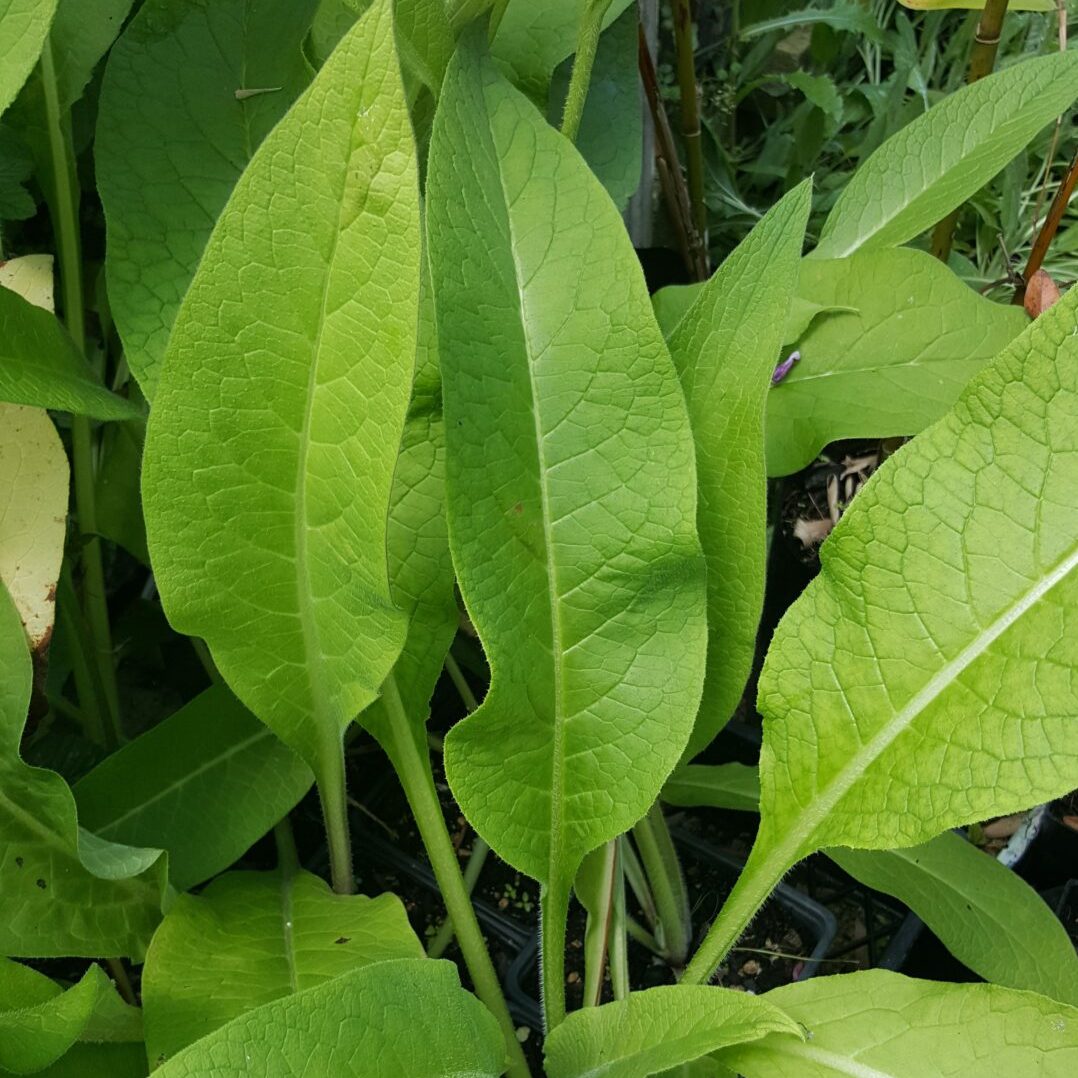
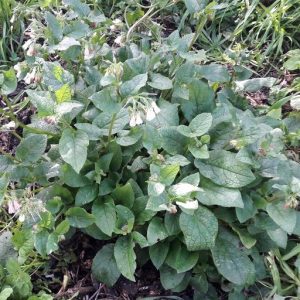
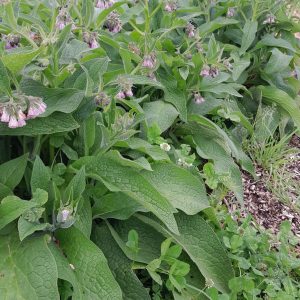
Symphytum officinale, also known as Common Comfrey, is a herbaceous perennial native to Europe and Asia and naturalised in North America. This species is the original plant as referred to in the ancient literature about medicinal herbs. It looks extremely similar to Russian Comfrey but the leaves are slightly more elongated and pointed at the tips, and the bell-shaped flowers open a little earlier than Russian Comfrey, and are a deeper maroon pink – very attractive. Height to 75cm when in flower.

Note – this is a true wild form of comfrey which is NOT sterile and MAY spread by seed. Russian Comfrey on the other hand is a naturally occuring hybrid which is sterile and does not spread by seed – we also sell this variety, along with dwarf evergreen comfrey which does not spread by seed. However with all types of comfrey make sure you plant it where you want it – it’s impossible to remove the deep chunky taproot!

9cm pot

Photos: Kahikatea Farm

Cultivation

Tolerant of full sun through to quite deep shade but does best with some shade and definitely needs extra moisture if it is growing in full sun.  Cut back hard 2 – 4 times a year to harvest the fabulous mulch or compost material.

Uses

The young leaves of comfrey were said to be edible for humans – used raw or cooked. They are slightly hairy so need to be chopped up finely. Older leaves can be dried and used as tea, roots can be cut up and added to soups or roasted (and added to roasted dandelion and/or chicory roots if desired) and used as a coffee substitute. Recent scientific research however has shown comfrey appeared to cause liver damage and cancerous tumours in rats. In light of this, the regular consumption of comfrey is not advisable.

True Comfrey can also be used in the garden like Russian Comfrey. It has a great balance of the major plant nutrients nitrogen, phosphorus and potassium, but is known in particular for its accumulation of potassium. It also contains silica, magnesium, calcium and iron. These nutrients will be naturally cycled through the soil as it dies down each winter but a well watered and fertilised patch can be harvested 3-5 times a season. The leaves can be used to make a liquid fertiliser, added to the compost heap or wilted and used to line potato trenches. Comfrey can also be grown around fruit trees as a ground cover and slashed several times a season to mulch the tree. The flowers are excellent bee attractors.

The fresh leaves make great chook fodder, are relished by geese (for relished read destroyed – and I mean totally!), and have been used as stock fodder for many years, but are preferably fed wilted.

Medicinal Uses

The therapeutic properties of comfrey are based on its anti-inflammatory and analgesic effects. The roots and leaves have been used medicinally for centuries, either internally, or externally as a poultice. Comfrey is particularly known for its healing properties for skin complaints such as eczema and for cuts, bruises and sprains. It is a common component of healing creams.  It is also well known for the treatment of painful muscles, joint complaints and osteoarthritis. It was once known as ‘knitbone’ for its role in healing broken bones, indeed the genus name comes from the Greek words symphyo meaning to grow together and phyton for plant as the plant was believed to help heal wounds. It has also been used to treat ulcers and hernias due to its demulcent properties, and as an expectorant to ease bronchitis and coughs.

Comfrey contains mixed phytochemicals in varying amounts, including allantoin, mucilage, saponins, tannins, pyrrolizidine alkaloids, and inulin. Pyrrolizidine alkaloids are responsible for comfrey’s hepatotoxicity, however the pyrrolizidine alkaloids echimidine and symlandine are not found in S. officinale (and indeed may be used as indicators of possible adulteration with other Symphytum species such as Russian comfrey S. × uplandicumin medicinal products). Nowadays, only pyrrolizidine-depleted or pyrrolizidine-free extracts are used in proprietary medicinal products. For more information see Comfrey – A Clinical Overview by Christiane Staiger.

Primary Actions: anti-inflammatory, analgesic, astringent, demulcent,expectorant,vulnerary

Parts Used: roots, leaves

History / Folklore / Further Info

Jo Says

We stock several species of comfrey. If you are wanting it for medicinal use, please choose this one, the true medicinal comfrey, Symphytum officinale. If you are after fodder, biomass or nutrient cycling, choose Russian comfrey, S. x uplandicum. Or if you want a lower growing plant which is evergreen and provides early season flowers for the bees (from late winter), choose the dwarf evergreen varieties.

Shipping Advice

N.B. Shipping costs are added AFTER you have placed your order, you will then be emailed an invoice with bank details. 

Smallest box rate:
This can fit up to 9 plants in 9cm pots.

Shipping a single tree can be expensive. We may be able to fit more in the box for the same price! See our shipping rates for single and multi tree boxes.

Combining sizes?
No problem, we will work out the best rate for you once you’ve placed your order.

Medical disclaimer

Jo has a passion for growing herbs but is not a qualified herbalist and has no medical background.

We are lucky to have Patricia Beagle working here at times, who is qualified, and some of her advice does appear on these pages, but herbs act differently for different people and can interact with other medicines. We therefore always recommend that you consult with your own qualified health-care practitioner before using herbal products, particularly if you are pregnant, nursing or on any medications.

Kahikatea Farm cannot take any responsibility for any adverse effects from the use of the plants or a plant not having the effect it is reputed to have. 

Search Products