WHAT WILD WEATHER! HOPING ALL OUR CUSTOMERS AND THEIR GARDENS AND FARMS ARE SURVIVING OK.......

Willow Hiwinui

Salix 'Hiwinui' NZ1130

Price range: $12.00 through $16.00

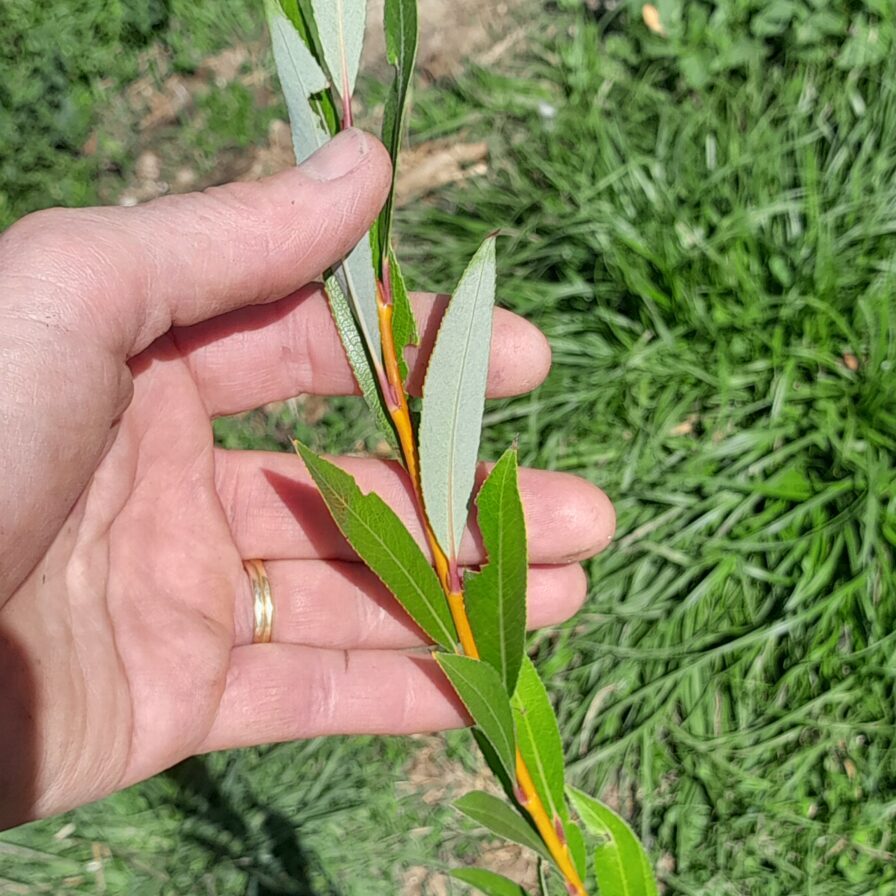
Hiwinui is a hardy, vigorous, straight stemmed tree willow growing to a mature height of 15-20m (if left unpruned) and a trunk diameter up to 90cm. It is a New Zealand-bred hybrid male clone of ‘Vitellina’ x (matsudana x alba). Male clones have the benefit of not self-seeding.

Potted plant – please note we do not sell cuttings.

PB3/4

Cultivation

Requires a sunny spot and moist soils, and will tolerate very wet soils and periodic flooding. Do not plant near buildings or drains as roots can be invasive.

Uses

Hiwinui is particularly good for stock fodder and erosion control. It can be planted as a shelterbelt for stock (including horses) to browse, or cut and fed out seasonally. The tannins contained in the plants can help to balance out lush grass growth after rain, helping to prevent bloat in stock.

Willows can forms a useful component of wastewater treatment systems, soil stabilisation and phytoremediation schemes, as the plants are said to take up heavy metals and other toxic substances. They also produce a huge amount of biomass which can be ‘chopped and dropped’ throughout the season, or put through a wood chipper, in a forest garden or syntropic food forest situation to provide carbon material and mulch for soil improvement in the form of ramial wood chip (RWC). Willows can be ‘coppiced’ – cut to the ground every year or two, for easy management, producing many new shoots for ramial wood chip. Larger trees are great for firewood.

Willow branches can also be chopped and soaked in water for 24 hours to make a rooting hormone for cuttings. Willows provide excellent bee food in early spring for rearing brood.

Medicinal Uses

Willows have been used worldwide since ancient times to treat pain and fever. The Assyrians, Greeks and Native Americans were all aware of its analgesic properties. It has been used for joint pain, childbirth, sore throats, fevers, flu, headaches, back pain and toothache. An infusion of leaves can also be used to induce calm in nervous insomnia, and in a bath for rheumatism. Willow leaves have also been explored for use in wound dressings and gingivitis due to their antimicrobial action. White willow (Salix alba) is the most used species, containing the highest levels of salicin but all willows contain it to some degree.

Primary Actions: antipyretic, analgesic, anti-inflammatory, astringent, tonic, bitter

Parts Used: bark, leaves

History / Folklore / Further Info

In many cultures willows symbolize resilience, flexibility and adaptability. In others they are a symbol of loss, grief and renewal. They have been used in cleansing rituals, to celebrate the arrival of spring, and in Native American traditions they are often used to make ‘dreamcatchers’.

Herbie Says

Mum cuts our willows to feed to my horse friends Robbie, Jett and Blue, who eat it like lollies! It helps to keep parasites away, and helps with pain relief if they are sore. When Robbie had a sore tummy, willow was the only thing he would eat.

Shipping Advice

N.B. Shipping costs are added AFTER you have placed your order, you will then be emailed an invoice with bank details. 

Smallest box rate:
This can fit up to 9 plants in 9cm pots.

Shipping a single tree can be expensive. We may be able to fit more in the box for the same price! See our shipping rates for single and multi tree boxes.

Combining sizes?
No problem, we will work out the best rate for you once you’ve placed your order.

Medical disclaimer

Jo has a passion for growing herbs but is not a qualified herbalist and has no medical background.

We are lucky to have Patricia Beagle working here at times, who is qualified, and some of her advice does appear on these pages, but herbs act differently for different people and can interact with other medicines. We therefore always recommend that you consult with your own qualified health-care practitioner before using herbal products, particularly if you are pregnant, nursing or on any medications.

Kahikatea Farm cannot take any responsibility for any adverse effects from the use of the plants or a plant not having the effect it is reputed to have. 

Related Products

Search Products