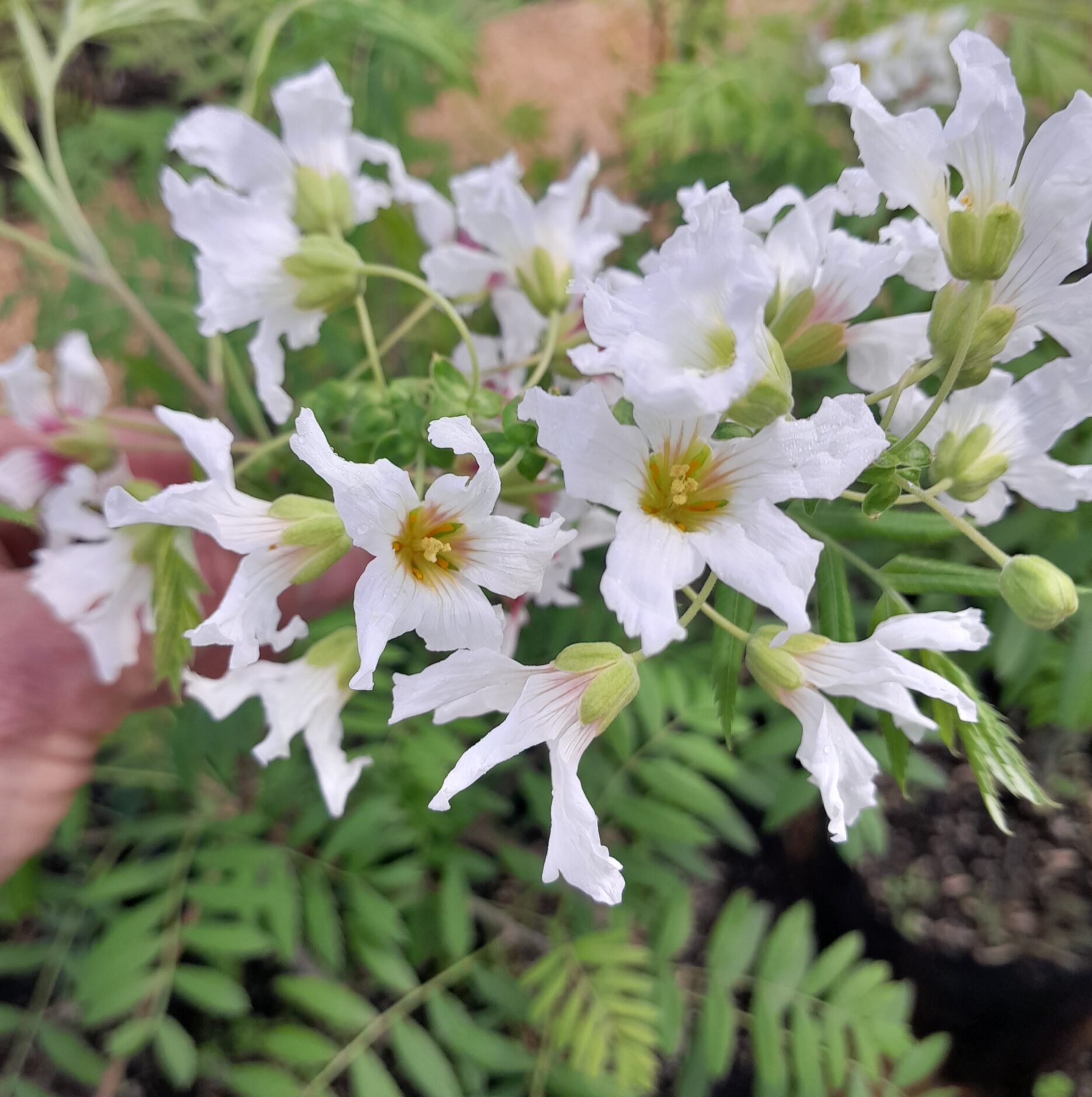
Xanthoceras sorbifolium
Also known as Chinese Chestnut, this deciduous small tree or shrub is native to Northern China, where it is considered sacred and planted at temples. Distantly related to the rowan, the Yellowhorn is actually the only species in its genus, and is also considered the ancestral tree of the Sapindaceae family. ‘Sorbifolium’ means ‘rowan-like leaves’, whereas the genus name comes from the Greek ‘xanthos,’ meaning yellow and ‘keras,’ meaning horn, due to the yellowish horn-like glands between the petals.
The pinnate leaves are indeed rowan-like, and are edible. In Spring (late September/early October here) clusters of white starry flowers with reddish-yellow centres are produced. They are fragrant, have a very high nectar content, and are edible. They are followed by green round or pear shaped fruits which can be as large as a tennis ball in the right conditions. When the fruits ripen, they split into three sections, revealing a white spongy edible pulp and edible pea-sized seeds. These are said to be sweet and similar in taste to chestnuts or macadamias, with a softer, waxier texture, more like sunflower seeds. The seeds can be eaten raw or ground into a powder and boiled. The husk contains the organic compound furfural, which has a wide range of industrial uses.
Medical research in the United States and China has found various benefits from the plant. An extract from the fruit peel is said to inhibit the cells of ovary cancer, cervical cancer and melanoma. Treatments for rheumatism can be made from the branches and trunk, and the leaves can be used to make a tea to treat rheumatism and lower blood pressure. The husks are used to treat urinary system diseases.
Yellowhorns are also being investigated in the US and China for use as biofuel – the fruit is comprised of 40% oil, and the kernel itself as high as 72%. These oils are also high in nutritional and medicinal value. The post-oil extraction meal from the seed is rich in protein – some studies have shown it to be higher than soy protein and sunflower seed protein, and approaching levels in casein.
Yellowhorns are fully hardy low maintenance trees/shrubs and are very ornamental. They enjoy full sun and well drained loamy soil, though they can also tolerate part shade and both wet and dry spells. They are relatively slow growing, can grow to 8m tall and 3m wide but can be kept pruned smaller. Note though that flowers form on old wood. Yellowhorns are often multi-stemmed and can sucker, but can also be pruned to a single trunk. They have hermaphrodite flowers and some single fruiting specimens are known, however mostly it appears that they are self infertile and need more than one tree to achieve pollination. Even so, rates of fruit production appear to be highly variable.
PB5 Certified Organic Plant
Photos: All Kahikatea Farm except seed capsule – UBC from Permies.com website