UNFORTUNATELY WE HAVE HAD TO INCREASE OUR SHIPPING RATES AS OF 8 JUNE DUE TO THE HIGH VARIABLE FUEL RATES NOW BEING ADDED BY OUR COURIER ARAMEX. WE ARE GRATEFUL THAT THESE EXTRA CHARGES HAVE ONLY JUST KICKED IN DESPITE THE RISE IN FUEL COSTS OVER THE LAST 2 MONTHS.

Holm Oak

Quercus ilex

$26.00

Evergreen oak tree from the Eastern Mediterranean, and probably one of the most important of all Mediterranean trees, flourishing from the maritime climate of the Atlantic coast of France across to Albania, Greece and North Africa. It is often found in association with pine, arbutus, carob and pistachio species, and provides a crucial food source for birds, deer and wild boar as well as ecosystem services such as preventing soil erosion.

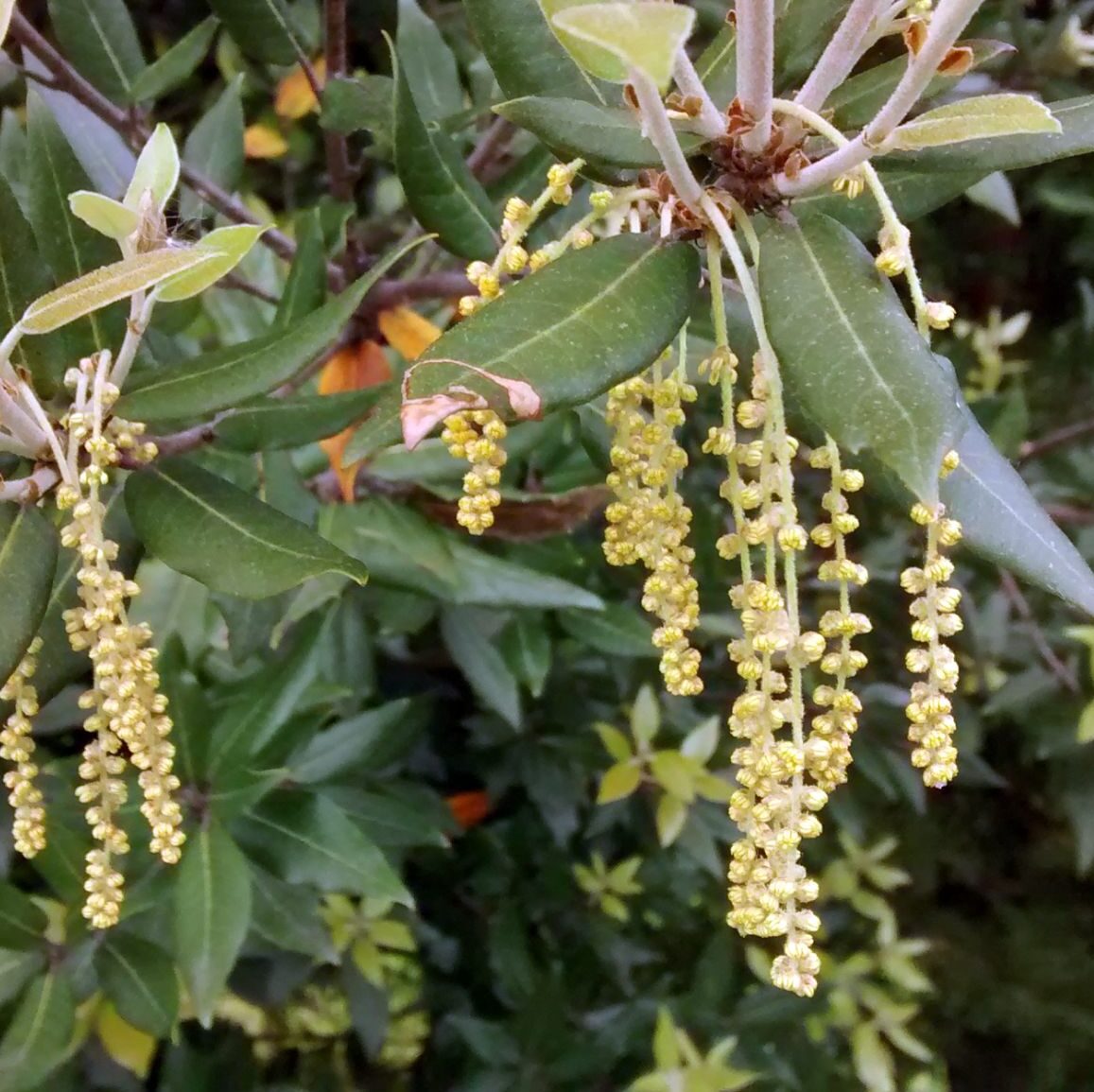
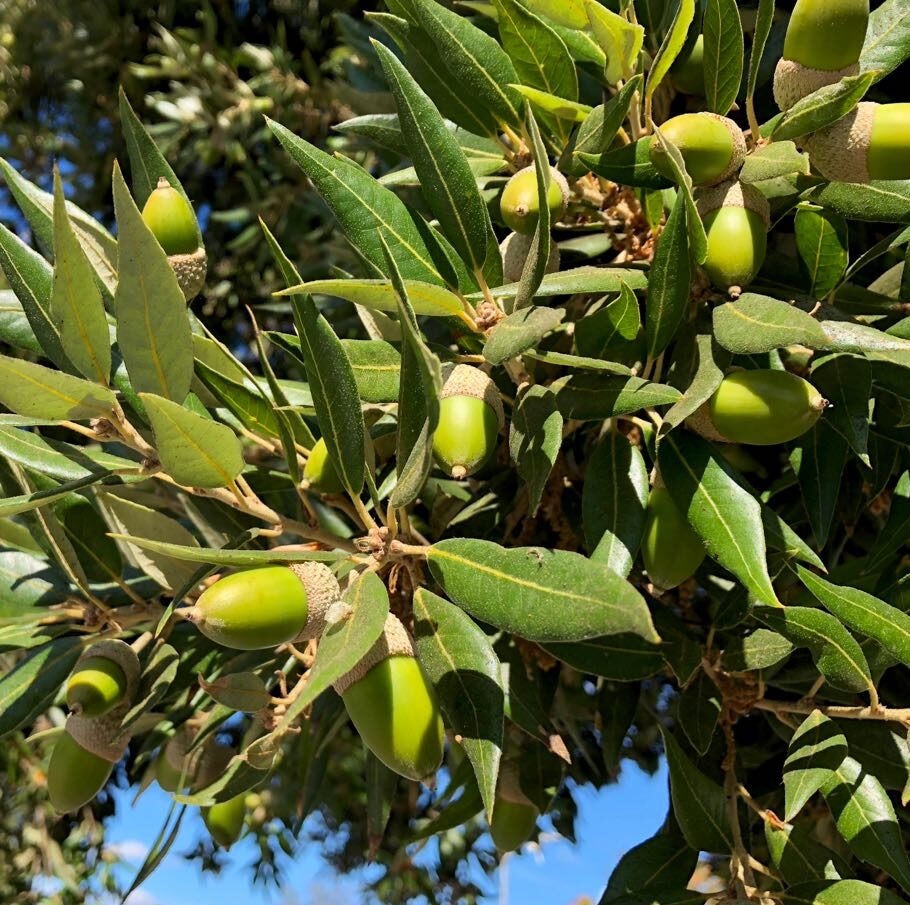
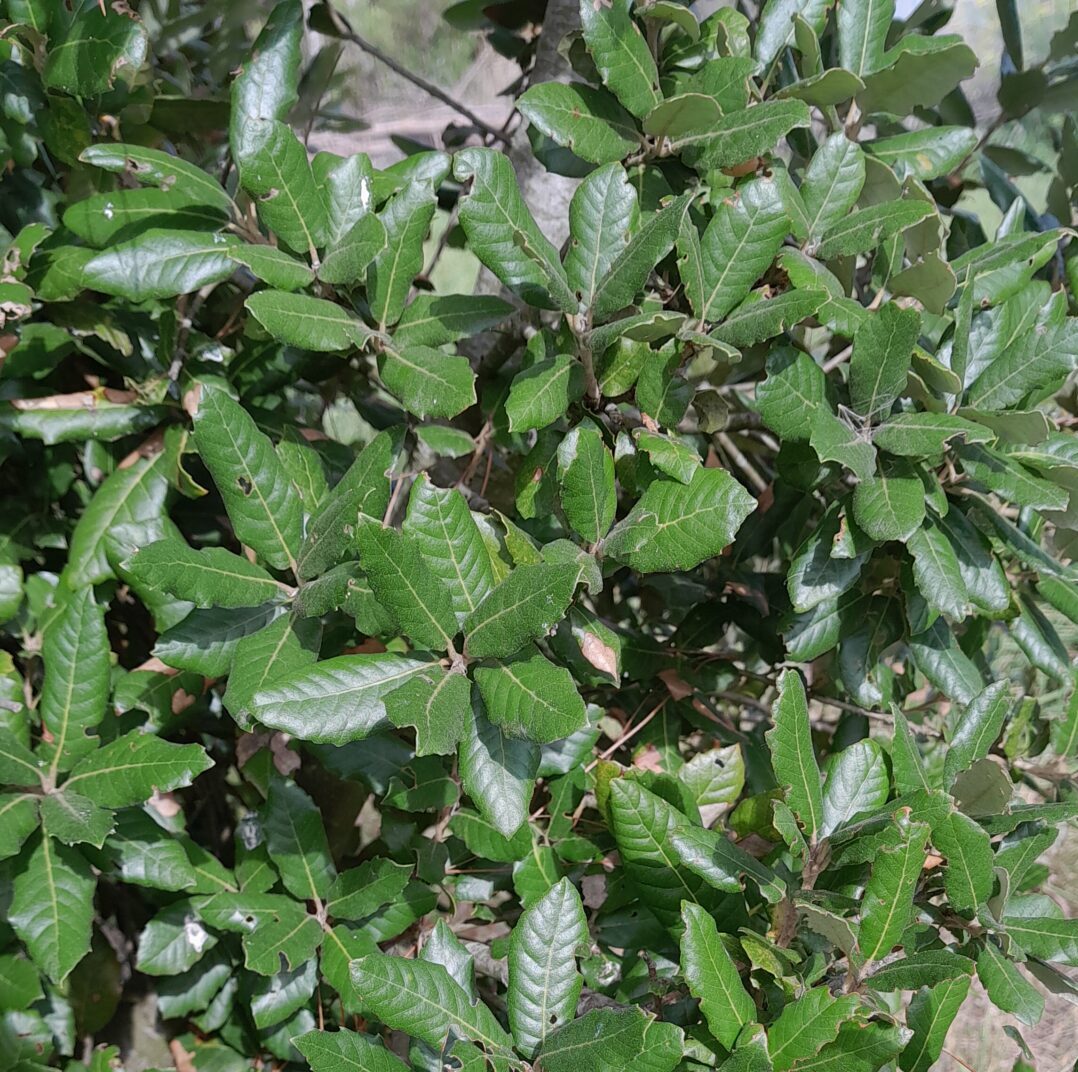
Generally a broadly spreading tree with a dense crown, it can sometimes have a more columnar appearance, and occasionally forms a large suckering shrub. It has dark green leathery leaves with wavy holly-like margins, which are pubescent on both sides (surfaces are covered in a whitish ‘down’) when emergent, giving a white, woolly effect to new leaf growth in spring. The pubescence then falls away from the upper surface leaving it shiny. The structure of the leaves is designed to help it withstand dry summers and cold winters, by reducing evaporation and reflecting light. Attractive yellow catkins are formed in late spring, followed by the development of acorns in groups of one to three, each up to 3cm long.

Holm oaks can grow to a height of 15-20m but can also be kept clipped as a hedge. They are slow growing but long lived. They are wind-pollinated, and unlike many oak species, they are self-fertile. Frost hardy to -15 degrees.

Deep root 11cm pot Height 30-40cm

Photos: Kahikatea Farm, except catkins Francisco Garin and acorns Quercus ilex, holm oak, holly oak | Trees of Stanford & Environs

Cultivation

Holm oaks are tolerant of a wide range of sites from dry to moist soils, varying pH levels, full sun or part shade. They can withstand heat, drought, exposure, pollution  and salt spray – what heros! Very heavy clay or saline soils are not suitable however.

Pruning, if required, is best done outside of frost season, ideally trimming back new growth in late spring or early summer.

Holm oaks can be susceptible to  various species of leaf miner, which can cause some unsightly leaves but does not seems to affect their health, so we do not recommend treatment.

Uses

The toughness of Holm oaks and ability to withstand hard pruning makes them excellent for hedging and even topiary if that’s you’re thing! They can also be espaliered to create an evergreen garden screen. Being evergreen means they also work well in a southern shelterbelt/windbreak.

The timber is incredibly hard and strong. The Romans used the wood for making the wheels of carts and carriages, as well as agricultural tools. Today it is sometimes used for firewood as it is slow and long lasting and can even be burnt green. It also makes excellent charcoal.

Holm oak acorns are nutritious and great for feeding pigs and ducks. They are used to feed pigs reared for the famous Iberian ham. Being high in starch, they are a rich source of energy, and also contain vitamins, minerals, antioxidants and monosaturated fats. The latter are manifested as streaks of ivory coloured fats in the meat, which dissolve in the mouth, giving it a special flavour alongside the nuttiness of the acorn.

The acorns are also edible for humans once the tannins have been removed. They can be dried, ground into a powder and used as a thickening in stews etc or mixed with cereals for making bread. Holm oaks are also one of the primary mycorrhizal partners of the Black Truffle.

Medicinal Uses

Oak is known for its astringent and anti-inflammatory properties due to the tannins. It  can be used to treat digestive issues including acute diarrhoea, for inflamed gums, sore throats and ulcers, to treat skin conditions such as eczema and psoriasis and varicose veins.

History / Folklore / Further Info

In ancient Greece the leaves of the holm oak were used to tell the future and they were also used to make crowns to honour people. The acorn was seen as a sign of fertility and wearing acorn jewellery was believed to increase fertility. The trees were planted in groves by philosophers Plato and Aristotle for their scholars.

Sir Herbert Maxwell wrote in ‘Trees: A Woodland Notebook’ (1915) that it is one of the most ornamental trees that can be grown: “Planted in the open, and given some attention in its youth to keep it to a single leader, it develops into a stately-domed mass of evergreen foliage, quite distinct in character from any other tree that flourishes in the British Isles. It would be sombre, did the leaves not glitter delightfully in sunlight; and in cloudy weather the wind sweeps up their white undersides and sets them all a-twinkle.”

A Holm Oak stands at St Barnabas church in Mt. Eden, Auckland, with a current height of 18.62m and a dbh (diameter at breast height) of 2.46m. It is a protected tree and is profiled in ‘Great Trees of New Zealand’, Burstall & Sale’s 1984 book.

Herbie Says

Holm oaks can provide wonderful shade in summer and shelter in winter for my grazing animal friends. But beware – acorns eaten in quantity can be toxic. They seem to be are a bit like lollies for animals – some of my cattle and horse friends can develop a craving for acorns and eat them in preference to pasture grass or hay, but they actually contain phenols and tannins which can cause fatal renal failure. The new shoots and unripe green acorns are actually the most toxic, so make sure branches are of a height that can’t be accessed. Ripe acorns are less toxic, but are more accessible and more likely to be eaten in quantity, so it’s best to fence off access to paddocks with oak trees in autumn. Instead, put pigs in there and let them clean up the acorns!

Shipping Advice

N.B. Shipping costs are added AFTER you have placed your order, you will then be emailed an invoice with bank details. 

Smallest box rate:
This can fit up to 9 plants in 9cm pots.

Shipping a single tree can be expensive. We may be able to fit more in the box for the same price! See our shipping rates for single and multi tree boxes.

Combining sizes?
No problem, we will work out the best rate for you once you’ve placed your order.

Medical disclaimer

Jo has a passion for growing herbs but is not a qualified herbalist and has no medical background.

We are lucky to have Patricia Beagle working here at times, who is qualified, and some of her advice does appear on these pages, but herbs act differently for different people and can interact with other medicines. We therefore always recommend that you consult with your own qualified health-care practitioner before using herbal products, particularly if you are pregnant, nursing or on any medications.

Kahikatea Farm cannot take any responsibility for any adverse effects from the use of the plants or a plant not having the effect it is reputed to have. 

Related Products

Search Products