LONG TERM OUT OF STOCK
SOLD OUT
OUT OF STOCK
AVAILABLE SPRING
AVAILABLE SUMMER
AVAILABLE AUTUMN
AVAILABLE WINTER
WINTER DORMANT
AVAILABLE SOON
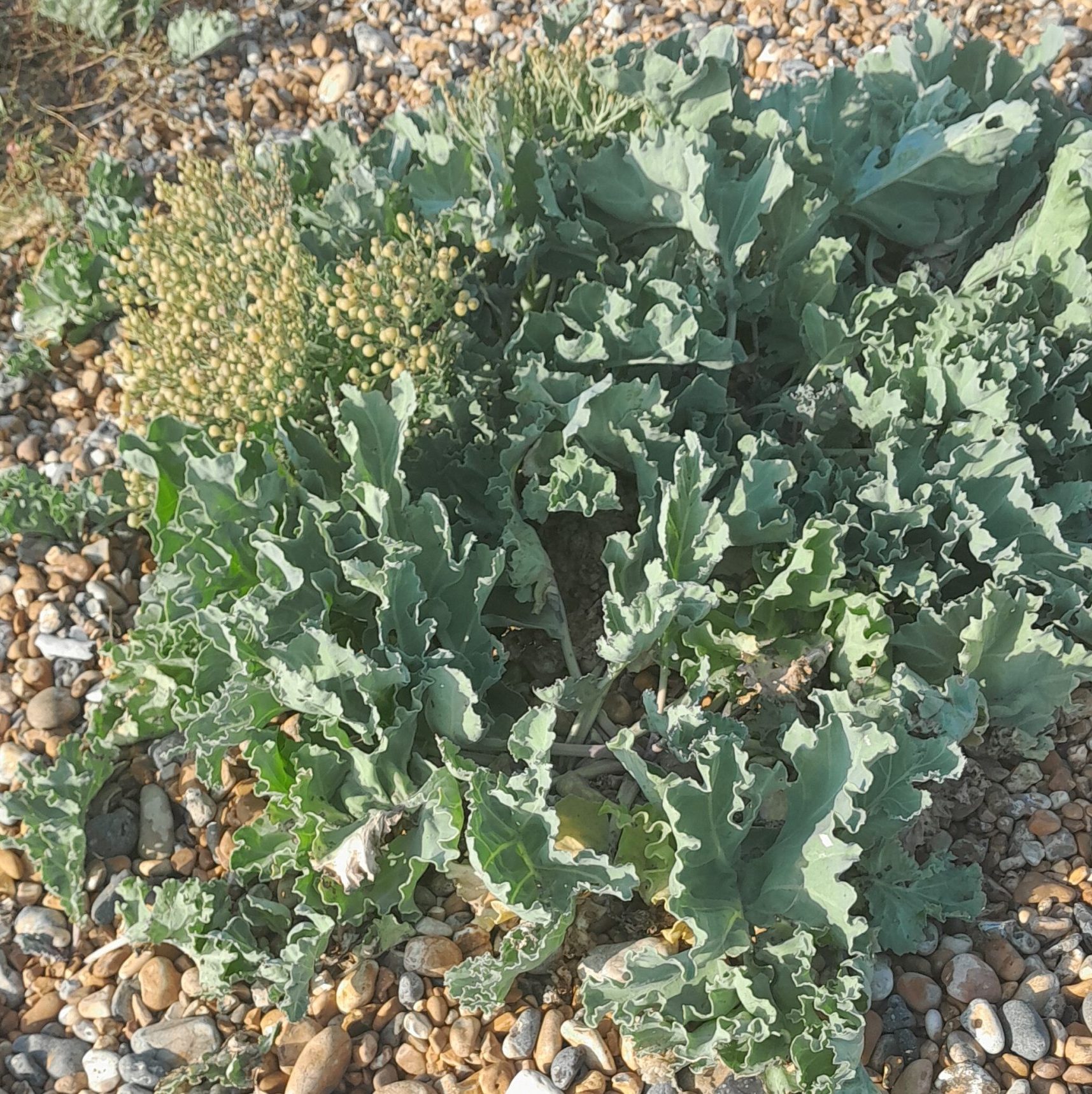
Also known as sea-colewort and scurvy grass, this fascinating herbaceous perennial is related to true kale, and is native to the coastlines of Europe, both around the Atlantic Ocean and the Black Sea. Since ancient times the young, fleshy white roots have been used as a forage food, and the leaves have been eaten by humans and fed to cattle. Local people also learned to heap loose shingle around the root crowns in early spring, causing the emerging shoots to be blanched (in the same way as rhubarb). Over-harvesting from the wild decreased the native populations but in Britain wild harvest is now protected. Unlike other kales, sea kale grows from a basal rosette rather than a stem. It dies down in winter, though in warmer areas it may not die down completely. Through the growing season it can reach a height and spread of 30 – 75cm. The leaves are wavy and silvery blue-green and are very attractive. In summer white sweetly scented flowers are produced which are attractive to bees. Frost hardy.
9cm pot
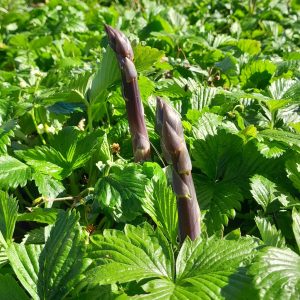
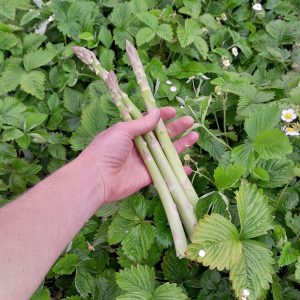
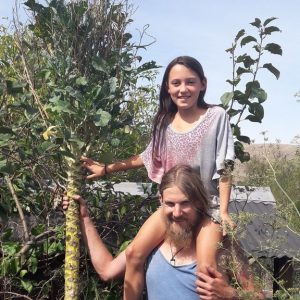
Photos: Kahikatea Farm (from Shoreham Beach, near where Jo grew up), and potted plants from our nursery
Predictably Sea Kale grows well in salty, sandy and gravel soils, and can withstand salt winds. However it can also be grown in average garden soils given adequate drainage. It does not need a lot of moisture but does need a little watering in a drought. It enjoys a position in full sun or part shade.<br><br>If forcing the plant for the tender new shoots, you can use a bucket, pot or just mound the plants up with straw. This should not be done until the second year, to allow the plants to establish first, and the process takes around three weeks. If growing for leaves, these are best harvested when young, as older leaves can become rubbery and bitter. Roots should also not be harvested until the second year (and not too many roots should be taken otherwise it may weaken or kill the plant). Sea kale plants can be mulched and fed with seaweed and rotted manure to increase the leaf harvest.
N.B. Shipping costs are added AFTER you have placed your order, you will then be emailed an invoice with bank details.
Smallest box rate:
This can fit up to 9 plants in 9cm pots.
Shipping a single tree can be expensive. We may be able to fit more in the box for the same price! See our shipping rates for single and multi tree boxes.
Combining sizes?
No problem, we will work out the best rate for you once you’ve placed your order.
Jo has a passion for growing herbs but is not a qualified herbalist and has no medical background.
We are lucky to have Patricia Beagle working here at times, who is qualified, and some of her advice does appear on these pages, but herbs act differently for different people and can interact with other medicines. We therefore always recommend that you consult with your own qualified health-care practitioner before using herbal products, particularly if you are pregnant, nursing or on any medications.
Kahikatea Farm cannot take any responsibility for any adverse effects from the use of the plants or a plant not having the effect it is reputed to have.